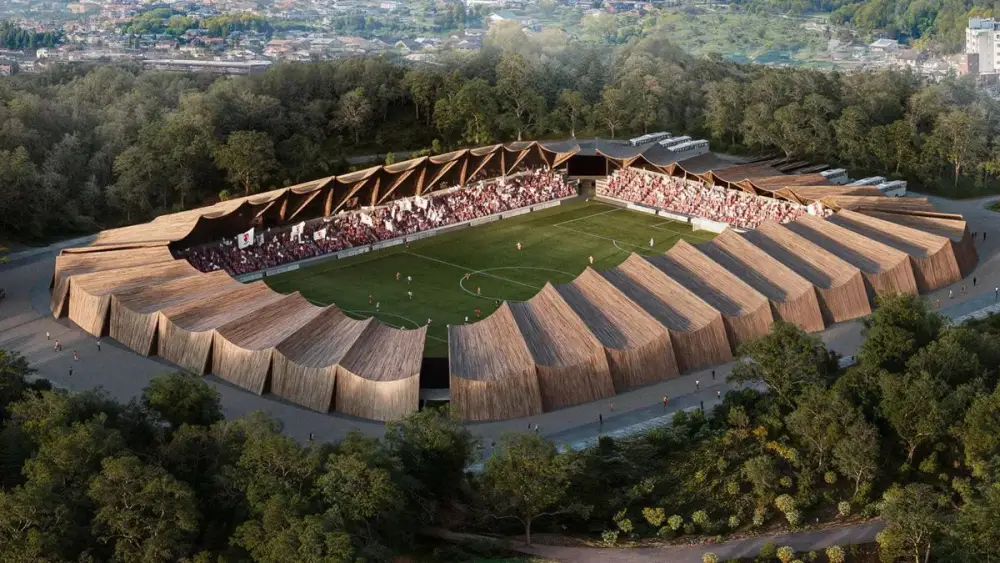
The First Timber Stadium in Fukushima: A New Benchmark for Wood Construction
Editor WoodBusinessPortal.com team - research, 2025 - November, 11
Japan is embarking on an innovative architectural and wood-industry milestone: Fukushima United FC has unveiled plans to build the first all-timber / circular wooden stadium in the country. The project, designed in collaboration with the architecture firm VUILD, represents not just a sporting venue, but a model of sustainability, regeneration and community engagement. For wood industry professionals, it presents new opportunities in engineered timber, local supply chains, design for disassembly, and wood-based architectural innovation.
Key Features of the Project. From the public reports and renderings, here are the principal characteristics of the planned stadium:
• Location & Capacity: The stadium will have 5,000 seats.
• Wood Type & Supply: It will be built from locally sourced laminated timber and small-section timber members. This supports regional supply chains for wood products.
• Design & Sustainability: The structure is engineered for disassembly and reuse — every beam and joint can be dismantled and reused. It draws on Japanese tradition (Shikinen Sengu) as inspiration.
• Architecture & Form:
- The stadium is designed as circular, but organized into four volumes each with entrances, rather than a single dominant stand.
- The roof will use hyperbolic paraboloid shells made of small section timber, with cantilevered overhangs, and timber elements suspended catenary-style to form a striking triangular profile inspired by local vernacular architecture (e.g. thatched houses of Ouchi-juku).
• Passive & Regenerative Features:
- Climate-responsive design: shading in summer, protection from winter winds; façades to encourage breezes.
- Water and snow management: rainwater collection and reuse, snow stored in winter for cooling in summer.
- Community & skills regeneration: reforestation programs, woodworking education, participatory construction.
Implications for the Wood Industry. For wood supply, manufacturing, design, and trade, this project offers several relevant implications:
- Local Timber Supply Chains:
Demand for high-quality laminated wood and small-section timbers from Fukushima Prefecture will stimulate harvesting, milling, lamination, drying, treating, and finishing industries locally. Suppliers who can meet standards of sustainability and engineered wood quality stand to benefit.
- Engineered Wood Products & Value-Add:
Laminated timber, cross-laminated or nail-laminated components, precision joinery, timber members for complex roof geometries entail advanced engineered wood manufacturing. These are higher margin segments.
- Reuse & Disassembly:
Designing for disassembly requires different connection systems, detailing, durability, and perhaps new adhesives or mechanical connectors. Innovation in these areas will be in demand.
- Regenerative Practices:
Wood industry players might partner with architects, local governments or NGOs on reforestation or forestry certification to supply sustainable wood, aligning with ESG criteria.
- Market Position & Export Potential:
Projects like this feed global interest in timber stadiums / wooden public venues. Countries or companies that develop reliable supply, credible sustainability credentials, and cost-competitive engineered wood components may find export opportunities.
Challenges & Considerations:
- Cost and Engineering Complexity: The structural demands of a stadium (span, loads, cantilevers, weather exposure) will require advanced engineering, high standards of quality in timber processing, transport, joining, and finishing. These add costs.
- Regulatory and Certification Requirements: Local building codes, fire safety, durability of timber, treatment to avoid decay, insect damage, etc. Sustainability certifications will likely be required for sourcing timber.
- Supply Stability: Local sourcing may reduce transport costs, but suppliers must ensure consistent supply of lamina or engineered wood elements meeting required dimensions and quality.
Market Trends & Predictions. The Fukushima stadium is part of a broader trend towards using engineered timber in large public architecture, especially stadiums, concert halls, public infrastructure, etc. Use of timber is seen as a way to reduce embodied carbon compared to steel/concrete. Growing interest globally in wood stadiums or public venues (see e.g. Forest Green Rovers’ stadium project in England) sets precedents and benchmarks.
Price pressures: As engineered wood demand increases, there may be upward pressure on timber raw material, drying, lamination, and transport costs. Companies who optimize supply chains, reduce waste, and offer innovative connections (disassemblable, modular) will have advantage.
For wood industry professionals, WoodBusinessPortal.com is a resource to stay ahead in contexts like this:
- Access market intelligence on engineered timber pricing, demand forecasts, import/export statistics for timber and value-added wood products.
- Connect with architects, engineers, and clients involved in large timber-construction projects.
- Monitor regulatory and sustainability standards (local and international) affecting public architecture using wood, including fire codes, treatment standards, durability.
- Source leads for timber suppliers, engineered wood manufacturers, and component providers who specialize in high performance, sustainable wood products.
The planned timber stadium in Fukushima represents a pioneering project in Japan that combines architectural innovation, wood engineering, sustainability, and community engagement. For the wood industry, it signals growing demand for engineered timber, precision joinery, design for disassembly, and enriched supply chain involvement. Stakeholders who can align with sustainability, excel in quality, and efficiently deliver engineered wood components are well-positioned to benefit from this emerging segment.
Sources:
1. coliseum-online.com
2. archdaily.com
3. designboom.com
4. interestingengineering.com