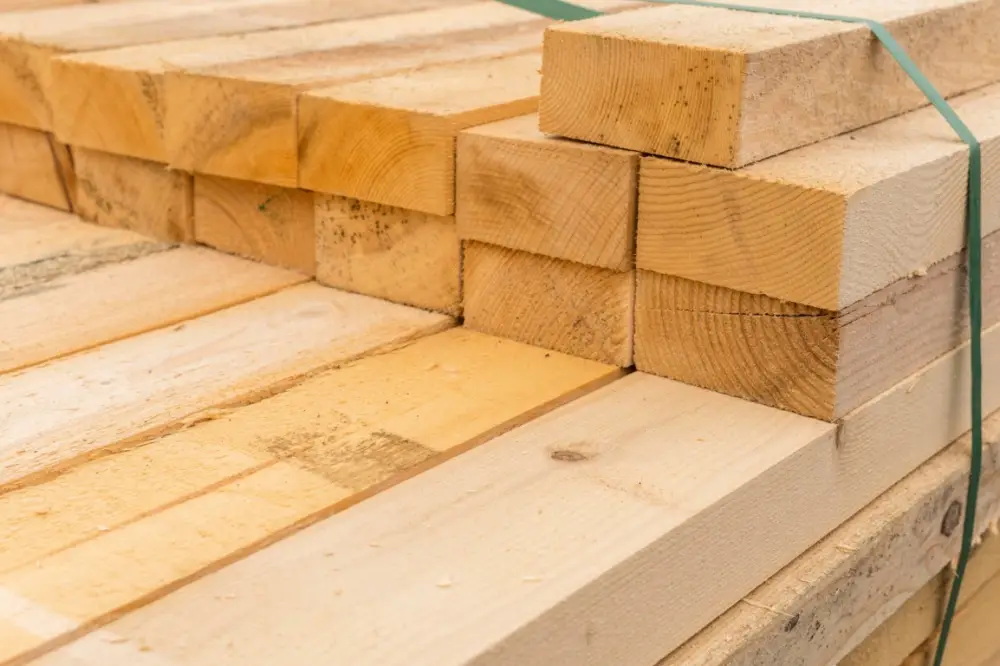
Scientists Tell Europe to Put More Wood in Buildings
Editor WoodBusinessPortal.com team - research, 2026 - august, 14
New research is strengthening the case for directing a larger share of Europe's harvested wood towards long-lived wood products, construction materials and timber buildings, rather than uses in which the carbon stored in wood is released relatively quickly.
Harvested wood products are becoming an increasingly important component of the European forest carbon balance. Wood incorporated into buildings, structural elements, furniture and other durable products can continue storing carbon for decades, extending the period during which carbon originally absorbed by forests remains outside the atmosphere.
The development is particularly relevant for the European timber and construction industries, where engineered wood products such as cross-laminated timber (CLT), glued laminated timber (glulam), laminated veneer lumber and prefabricated timber systems are expanding the technical possibilities for using wood in larger residential, commercial and public buildings.
Long-lived wood products gain strategic importance
Research cited by industry publication Wood Central indicates that harvested wood products are one of the fastest-growing components of Europe's forest-related carbon sink. This increases the strategic importance of how harvested timber is allocated after leaving the forest.
Long-lived products can retain carbon considerably longer than applications such as fuelwood or some short-lived fibre products. The European Forest Institute has also highlighted that forests and harvested wood products have acted together as a net carbon sink in the European Union for decades.
However, researchers and European institutions also stress that the overall climate impact cannot be evaluated solely by looking at carbon stored in finished wood products. Forest growth, harvesting intensity, forest age, fires, drought, pests, biodiversity and regeneration all influence the final carbon balance.
More opportunities for timber construction
For the European wood industry, increasing timber use in buildings could create additional demand for sawn timber, structural wood, CLT, glulam, engineered wood products and prefabricated building components
Timber construction can also substitute materials with relatively high embodied emissions, particularly in applications traditionally dominated by concrete and steel. At the same time, modern prefabricated timber construction can offer shorter installation times, lighter structures and opportunities for industrialised off-site manufacturing.
These trends are already encouraging investment in mass-timber production capacity and creating new markets for sawmills, engineered wood manufacturers, construction companies, architects and timber traders.
Professionals following these markets can monitor European wood industry statistics and market intelligence through WoodBusinessPortal.com, including developments affecting timber demand and wood-processing industries.
Forest availability remains a critical factor
The expansion of wood construction does not mean that European timber supply is unlimited. The European forest carbon sink has weakened in recent years as a result of several combined factors, including increased harvesting in some periods, ageing forests, drought, heat stress, wildfires and insect disturbances.
This means that future growth in timber construction will increasingly depend on efficient use of available wood resources, sustainable forest management, cascading use of timber and greater recycling of wood products.
For producers and traders, these constraints could also affect wood availability, regional price differences and international trade flows. Tracking timber prices and wood market trends therefore becomes increasingly important as construction demand competes with the panel, pulp, packaging and energy sectors for raw material.
A potential structural shift in European wood demand
If European policies increasingly favour long-lived carbon storage and lower-emission construction materials, the development could gradually change the structure of European wood demand.
Higher consumption of construction timber could support demand for sawlogs and engineered wood while influencing wood prices, timber imports, timber exports and investment in processing capacity across Europe.
The precise impact will vary significantly between countries depending on forest resources, construction regulations, building traditions, manufacturing capacity and domestic timber supply.
Companies exposed to these changes can follow wood imports, exports, prices, statistics and forecasts to identify changes in supply, demand and trading conditions across international wood markets.
Outlook for the European wood industry
The scientific debate increasingly points towards a more differentiated approach to wood utilisation: protecting and maintaining productive, resilient forests while prioritising harvested timber for applications capable of creating greater economic value and storing carbon for longer periods.
For the wood industry, construction represents one of the most important opportunities for achieving both objectives. Growth in timber buildings could generate additional demand for higher-value wood products while encouraging technological development throughout the European forestry and wood-processing value chain.
At the same time, sustainable sourcing and efficient raw-material utilisation will remain essential. The future European wood market is therefore likely to be shaped not simply by how much timber is harvested, but increasingly by where that wood is used and how long it remains in productive use.
Sources
Wood Central – Scientists Tell Europe to Put More Wood in Buildings Not Boilers
Report published 10 August 2026 covering the growing importance of harvested wood products within Europe's carbon sink and the potential benefits of prioritising longer-lived wood applications.
https://woodcentral.com.au/harvested-wood-products-carbon-sink/
European Forest Institute – How has the forest-based carbon sink and stock evolved in the European Union?
Analysis of long-term EU forest carbon storage, harvested wood products and roundwood production.
https://efi.int/publication/how-has-forest-based-carbon-sink-and-stock-evolved-european-union
European Commission Joint Research Centre – The European forest carbon sink is declining: can we reverse the trend?
European Commission analysis of recent pressure on the EU forest carbon sink, including harvesting, ageing forests and climate-related disturbances.
https://joint-research-centre.ec.europa.eu/jrc-news-and-updates/european-forest-carbon-sink-declining-can-we-reverse-trend-2025-07-30_en
Follow the European and global wood market with WoodBusinessPortal.com. Access wood industry statistics, timber prices, imports, exports, market developments, forecasts and trends designed for professionals throughout the forestry, timber and wood-products value chain.
Visit www.WoodBusinessPortal.com for data and market intelligence supporting better-informed decisions in the international wood industry.