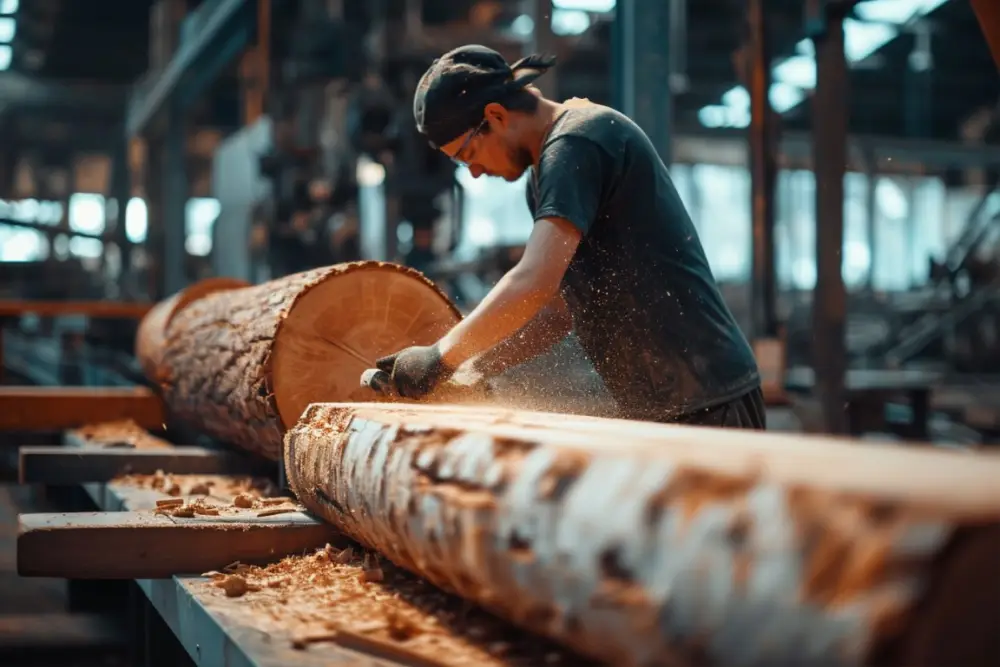
Forestry Labour Shortage Deepens
Editor WoodBusinessPortal.com team - research, 2026 - october, 2
The forestry sector is facing an increasingly serious challenge that could have direct consequences for the entire wood industry: the shortage of qualified workers. Labour scarcity is no longer only an administrative or recruitment issue. It is beginning to affect forestry operations, timber harvesting, machinery utilisation and the ability of companies and forestry organisations to maintain operational capacity. 🪵
A recent example comes from Romania, where forestry organisations have reported difficulties in filling positions such as tractor operators and mechanical wood processing workers. Vacancies in operational forestry roles can directly affect timber harvesting activities and the ability to use available machinery efficiently.
In some cases, expensive forestry equipment cannot be fully utilised because there are not enough qualified operators. Workers may have to be temporarily transferred between operating units in order to maintain essential forestry activities.
Labour shortages extend beyond timber harvesting
The problem is not limited to workers involved directly in wood harvesting. Forestry staff responsible for field operations, forest management and supervision are also increasingly difficult to recruit and retain. 🌳
Industry organisations have warned that the forestry sector needs additional human resources, particularly for operational activities, field supervision, control, IT systems and increasingly complex requirements related to biodiversity and timber traceability.
The challenge is particularly significant because forestry work often requires specialised skills, experience with heavy machinery and the ability to operate under difficult working conditions. These qualifications cannot be replaced quickly.
What does the labour shortage mean for the wood industry?
For companies operating in logging, sawmilling, lumber production, furniture manufacturing, wood packaging, biomass and other wood products sectors, labour shortages in forestry can affect the entire wood supply chain.
1. Lower timber harvesting capacity
Even when machinery and forest resources are available, insufficient numbers of trained operators can reduce the effective capacity to harvest, process and transport wood.
2. Higher operating costs
Competition for qualified forestry workers may increase labour costs, while moving personnel between forestry operations generates additional logistics and transportation expenses.
3. Pressure on wood supply
Lower harvesting capacity can create delays in the supply of logs, pulpwood and other timber assortments to sawmills and wood processing companies. 🪵
4. Potential pressure on wood prices
A labour shortage does not automatically lead to higher wood prices. Timber prices are also influenced by demand, harvesting volumes, inventories, imports, exports and international market conditions. However, increasing harvesting and logistics costs can become another factor contributing to upward pressure on raw wood prices.
Professionals following these developments can also consult the WoodBusinessPortal.com analysis of high log prices and pressure on the European wood market.
Mechanisation and digitalisation are becoming increasingly important
Over the medium term, the shortage of forestry workers could accelerate investment in mechanisation, automation and digital forestry technologies.
Harvesters, forwarders, digital forest inventory systems, satellite monitoring, drones and route optimisation technologies can help increase productivity per employee. However, technology does not eliminate the need for qualified workers.
On the contrary, the modern wood industry increasingly requires operators capable of managing sophisticated forestry and wood processing equipment.
The challenge is therefore evolving from a simple recruitment problem into a broader issue involving professional training, workforce retention and technological skills.
These labour developments should also be considered together with wider market conditions. A detailed overview is available in The Wood Market in 2026: Romania and Europe – Prices, Demand and Industry Trends, which examines wood prices, timber demand, production, imports and exports.
Impact on sawmills and wood processors
The effects of labour shortages in forestry can move rapidly downstream through the wood value chain.
Sawmills depend on predictable supplies of logs and industrial wood. Furniture manufacturers, construction companies, packaging producers and wood panel manufacturers depend, in turn, on reliable deliveries from primary wood processors.
If timber harvesting capacity becomes constrained, companies may face:
• irregular deliveries of logs and raw wood;
• higher timber procurement costs;
• increased transportation and logistics expenses;
• reduced sawmill utilisation rates;
• greater competition for available wood resources;
• increased dependence on imported timber or semi-finished wood products.
For wood industry companies, monitoring not only wood prices but also labour availability, harvesting capacity and forestry productivity is therefore becoming increasingly important.
Wood industry outlook for 2026-2027
The development of the forestry workforce should be monitored together with raw material prices, energy costs, construction demand, furniture production, wood imports and exports and new European timber traceability requirements.
Recent market conditions already show how sensitive the European wood industry is to raw material availability and pricing. European companies continue to operate in an environment characterised by relatively high log costs, cautious demand and pressure on margins.
If the shortage of qualified forestry workers continues, companies investing in automation, mechanisation, employee training, workforce retention and productivity may be better positioned to manage rising operating costs and supply-chain disruptions.
The forestry labour shortage should therefore no longer be regarded simply as a human resources issue. It may increasingly become a structural factor affecting wood supply, timber prices, production costs and the competitiveness of the European wood industry. 🌳
Follow international wood market developments
WoodBusinessPortal.com provides professionals across the global wood industry with information about wood prices, timber prices, lumber markets, wood imports, exports, statistics, forecasts and industry trends.
Explore the WoodBusinessPortal.com international wood industry platform to discover market information, buyers, suppliers and B2B opportunities across the forestry, timber, furniture and wood products sectors.
Sources:
Jurnal de Dambovita
AGERPRES
Gazeta Dambovitei
📈 Monitor the wood market: Follow WoodBusinessPortal.com for information about wood prices, timber supply, lumber markets, imports, exports and international wood industry trends.
🪵 Looking for wood buyers or suppliers? Use WoodBusinessPortal.com to identify business opportunities, suppliers and potential customers across the global wood industry.
🌳 Operating in the wood industry? Join WoodBusinessPortal.com and promote your company, wood products and services directly to professionals, buyers and decision-makers across international markets.