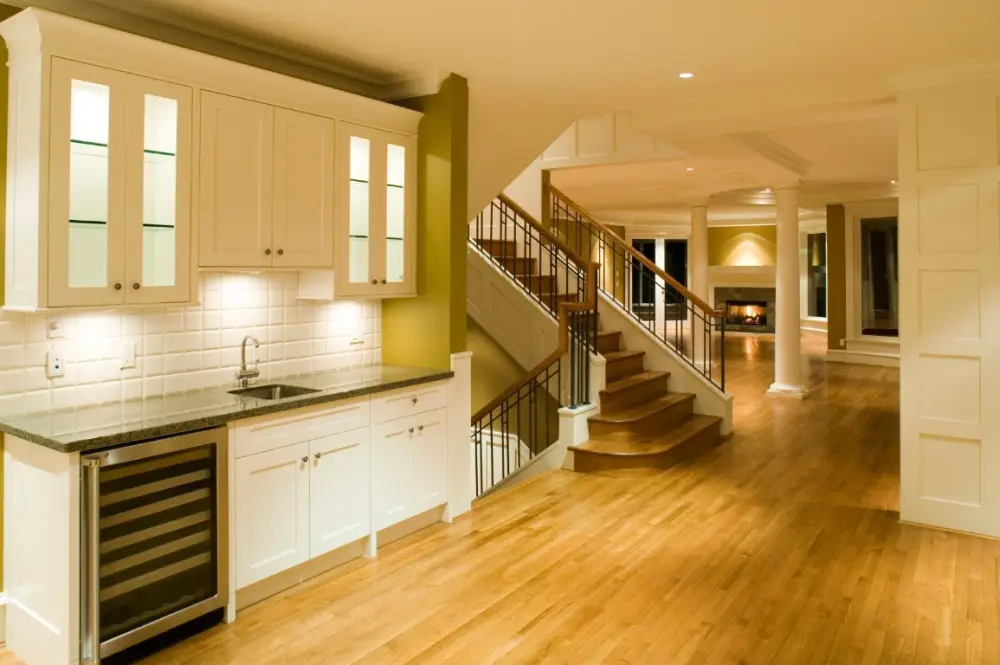
Romania remains an important furniture exporter
Editor WoodBusinessPortal.com team - research, 2026 - november, 3
Romania`s furniture industry remains one of the most export-oriented segments of the country`s wood industry. Romanian factories supply sofas, chairs, beds, home furniture, office furniture and other wood products to markets across Europe and beyond.
Trade data for 2025 indicate furniture exports worth more than EUR 2.2 billion, confirming the sector`s importance for Romania`s manufacturing industry and international trade. Germany remains the leading destination, followed by other major European markets such as Slovakia, the Czech Republic, France and Italy.
🌲 Romania remains an important furniture exporter
According to Eurostat-based trade data covering the main furniture categories, Romanian furniture exports reached approximately RON 11.3 billion, or around EUR 2.24 billion, in 2025.
Other industry datasets using broader furniture classifications indicate values closer to EUR 2.4-2.45 billion. The difference mainly reflects the methodology and product categories included in each statistical series.
Regardless of the statistical classification used, the conclusion is clear: furniture exports remain an important component of Romania`s wood and wood-processing industry and generate billions of euros in annual foreign sales.
The positive trend has continued into 2026. WoodBusinessPortal.com reports that Made in Romania furniture exports increased by approximately 9% in the first half of 2026, despite cautious European demand and continued pressure from raw material and operating costs.
🪵 Germany remains the main market for Romanian furniture
Germany accounts for approximately 16% of Romanian furniture exports, making it the most important international market for Romanian manufacturers.
Other significant destinations include Slovakia, the Czech Republic, France and Italy. Together, the top five markets represent close to half of Romanian furniture exports, illustrating the industry`s strong dependence on Europe while also showing a certain degree of market diversification.
Romanian manufacturers are also active outside the European Union, including in the United Kingdom, the United States and Middle Eastern markets.
International trade fairs and B2B platforms remain important tools for developing export relationships, particularly for small and medium-sized manufacturers looking to reach distributors, architects, retailers and international buyers.
📈 What is the economic impact of Romanian furniture exports?
The contribution of the furniture industry cannot be measured only by the value of finished products exported abroad.
The sector supports a much broader economic value chain that begins with wood and forest raw materials and continues through sawmilling, drying, panel production, components, upholstery, hardware, design, logistics and international transportation.
Furniture exports therefore support:
• industrial production in Romania;
• employment in furniture factories and the wider wood industry;
• sawmills and manufacturers of wood components;
• logistics and international transport companies;
• export revenues and Romania`s trade balance;
• development of higher-value wood products.
According to OECD data, furniture represented around 3% of Romania`s total goods exports in 2024, underlining the importance of the sector within the country`s international trade structure.
🌳 Higher added value is one of the furniture industry`s main advantages
From an economic perspective, there is a major difference between exporting raw material and exporting a finished product.
A cubic metre of wood transformed into furniture, components, design products or other high-value wood products can generate significantly greater economic value than exporting the same resource in a minimally processed form.
This is why the competitiveness of furniture manufacturing is strategically important for the entire wood and timber sector.
Investment in automation, design, energy efficiency, branding and international distribution can help Romanian companies move from subcontracting toward their own products and brands with higher added value.
📊 Wood prices and raw material costs directly affect furniture exports
The competitiveness of furniture manufacturers is closely linked to wood prices, timber prices, lumber prices, wood-based panel costs, energy and logistics.
When raw material costs increase faster than the prices manufacturers can obtain on export markets, profit margins come under pressure.
This is one of the main challenges across the European wood sector in 2026. WoodBusinessPortal.com`s analysis of the wood market in Romania and Europe in 2026 highlights high raw material costs, cautious demand and pressure on manufacturers` margins as major market factors.
For furniture exporters, it is therefore increasingly important to monitor:
• wood and timber prices;
• lumber and wood-based panel prices;
• furniture demand in Germany, France, Italy and other major markets;
• exchange rates;
• labour and energy costs;
• international freight costs;
• tariffs and international trade policies.
🌱 Wood traceability is becoming a condition for market access
Price and design are no longer the only factors considered by international buyers. The origin of the wood used in furniture production is becoming increasingly important.
European traceability and deforestation-related requirements are forcing companies across the wood industry to maintain clearer information about the origin of raw materials used in their products.
For furniture manufacturers, compliance can require additional investment in documentation, digital systems and supplier management. At the same time, verified sourcing and transparent wood supply chains can become a competitive advantage.
WoodBusinessPortal.com provides a detailed overview of the EU Deforestation Regulation and its advantages and disadvantages for SMEs in the wood sector, including implications for timber traders, sawmills, furniture producers and other wood-processing companies.
🪵 The challenge: moving from industrial supplier to international brand
Romania has industrial experience, skilled workers and direct access to the European Union market. However, a significant share of production is still manufactured for international clients and brands.
One of the major opportunities for the coming years is to increase the share of products sold under Romanian furniture brands, develop proprietary distribution channels and build direct relationships with retailers, architects, developers and international B2B buyers.
Digital sales channels and specialised B2B marketplaces can help small and medium-sized furniture manufacturers reduce their dependence on intermediaries and access new export markets.
📈 Outlook for Romanian furniture exports
The future performance of Romanian furniture exports will depend heavily on economic conditions in Europe and on the development of residential and commercial construction markets.
Germany, France and Italy remain key markets, meaning that a recovery in construction, housing transactions and consumer demand could support furniture orders.
Romanian manufacturers must also manage growing competition from Poland, Turkey, Asia and other major furniture production centres.
Romania`s advantages include its geographical position within the European Union, industrial experience, established production capacity and the ability to deliver customised products relatively quickly to European customers.
Over the medium term, competitiveness will increasingly depend on productivity, design, automation, wood availability, timber prices, traceability and the production of higher-value wood products.
Conclusion
Romanian furniture is exported to markets around the world, and annual exports exceeding two billion euros confirm the industry`s significant economic role.
The furniture industry transforms wood and other raw materials into high-value finished products, creates jobs, supports local suppliers and contributes to Romania`s export revenues.
The key challenge for the coming years will be maintaining competitiveness in a market characterised by high costs, fluctuating demand, new traceability requirements and intense international competition.
For Romanian manufacturers, increasing added value, developing their own brands and diversifying export markets can become important growth strategies.
🌲 Follow the global wood and furniture industry with WoodBusinessPortal.com
• Follow WoodBusinessPortal.com for wood prices, timber prices, imports, exports, statistics and market trends.
• Monitor developments in the international furniture, timber and wood products markets.
• Publish buying and selling offers for wood, timber, furniture and wood products.
• Find suppliers, customers, importers, distributors and international business partners.
• Promote your company and products to professionals across the international wood industry.
Sources:
• Furnilytics
• Furnilytics
• OECD
• HotNews