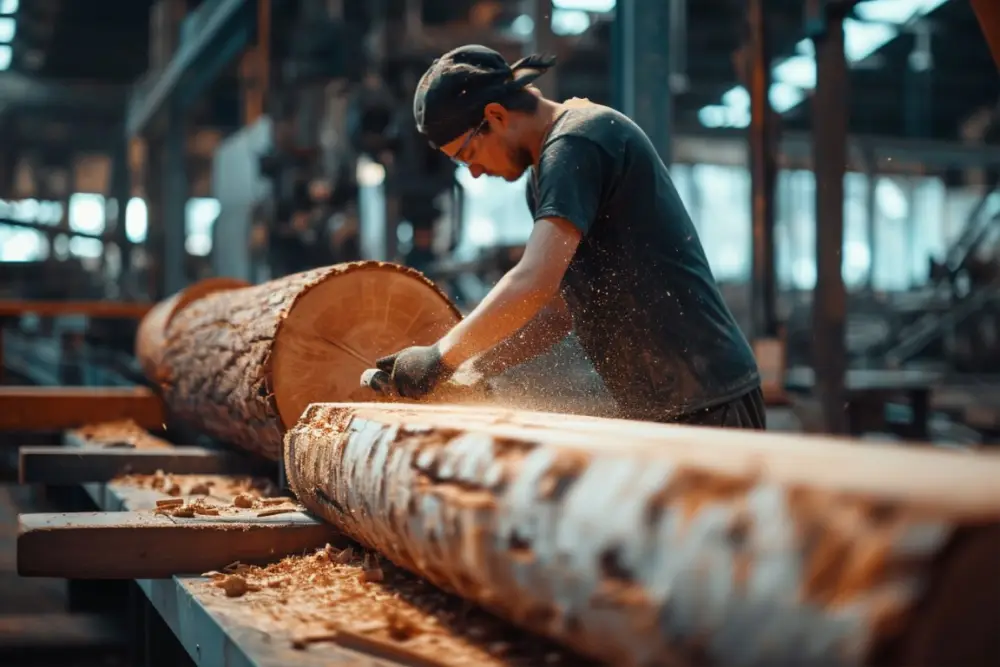
Italy - Wood Industry: "A Supply Chain Balancing Sustainability and Competitiveness"
Editor WoodBusinessPortal.com team - research, 2026 - november, 19
Italy`s wood industry is facing a strategic challenge: building a supply chain capable of meeting sustainability objectives without weakening the competitiveness of companies. Raw material availability, energy costs, European regulations, wood imports and the circular economy are becoming increasingly important factors for the future of the sector. 🌳
Italy has one of Europe`s most developed wood processing and furniture industries, but a significant share of the raw wood and timber used by manufacturers is sourced through imports.
A particularly relevant example is poplar wood. According to figures presented in the Italian Senate in 2026, industries using poplar require approximately 3.1 million tonnes per year, while domestic production from Italian plantations provides only around 1 million tonnes.
The difference is covered largely by imports from European countries including France, Belgium and Hungary. This illustrates one of the central challenges for the Italian wood industry: reducing dependence on imported timber without creating unsustainable pressure on domestic forest resources. 🪵
Italian wood: a strategic resource that remains underutilised
Italy has approximately 11 million hectares of forest area, but the existence of substantial forest resources does not automatically translate into high industrial availability of wood.
Terrain accessibility, fragmented ownership, harvesting costs, forest infrastructure and environmental restrictions all influence the amount of timber that can effectively reach the market.
In the case of poplar, the planted area is estimated at approximately 55,000 hectares. Meeting the full requirements of Italian industry through domestic production would therefore require a significant expansion of productive plantations and long-term investment.
For suppliers across Europe, the Italian market remains particularly important because of its strong demand for logs, sawn timber, semi-finished wood products, furniture components and other wood products.
A broader perspective on raw material availability can be found in WoodBusinessPortal.com`s analysis of tightening global softwood supply and its potential impact on the wood market.
Sustainability is becoming an economic criterion
For the Italian wood industry, sustainability is no longer solely an environmental objective. It is increasingly becoming a factor affecting market access, procurement strategy and commercial competitiveness. ♻
Forest certification, wood traceability, renewable raw materials, emission reduction and recycling are increasingly integrated into corporate strategies across the timber and furniture sectors.
FederlegnoArredo has repeatedly highlighted the naturally strong connection between the wood-furniture industry and sustainability, due both to the renewable nature of wood and the long service life of many wood products.
At the same time, industry representatives have stressed that environmental requirements must be implemented in a way that does not create excessive competitive disadvantages for European manufacturers compared with producers operating in regions where regulatory costs may be lower.
This represents one of the central questions facing the European wood industry: how can the green transition accelerate without encouraging industrial production to move outside Europe?
Competitiveness remains under pressure
Italy`s wood and furniture industry is operating in a challenging economic environment. Figures presented to the Italian Parliament indicate that the wood-furniture supply chain generated approximately EUR 51.7 billion in production turnover in 2024, around 2.9% lower than the previous year.
Weak international demand, energy costs, trade uncertainty and increasing administrative requirements can have a particularly strong effect on small and medium-sized companies operating in the wood industry.
For sawmills, wood panel manufacturers, furniture producers, packaging companies and other wood processors, the cost of raw material remains one of the most important indicators of competitiveness.
Current developments across Europe confirm how sensitive the sector remains to timber availability and raw wood costs. WoodBusinessPortal.com examines this issue in its analysis of high log prices and margin pressure across the European wood market.
The circular economy can become a competitive advantage
One area in which Italy already has considerable experience is wood recycling and the recovery of post-consumer timber.
Wood waste originating from furniture, packaging, construction and industrial production can be recovered and transformed into raw material for panels and other wood-based products.
This model reduces the consumption of virgin wood and can help limit dependence on imported timber. At the same time, investment in recycling, ecodesign and efficient manufacturing technologies can support the production of higher-value wood products. ♻
For the European wood industry, the circular economy is therefore increasingly being considered not only as an environmental requirement but also as an economic tool for reducing costs and improving security of raw material supply.
Wood imports will remain essential
Even if Italy succeeds in increasing the productive use of its forests and plantations, wood imports are likely to remain an important component of industrial supply.
Italy has significant wood processing capacity, while demand for certain timber categories exceeds domestic availability.
This imbalance creates commercial opportunities for European suppliers of logs, sawn timber, veneer, semi-finished wood components and other products for the Italian wood industry.
For timber exporters, sawmills and wood processors across Europe, monitoring Italian demand, timber prices, wood imports and regulatory developments may reveal new business opportunities.
A broader view of market conditions is available in The Wood Market in 2026: Romania and Europe - Prices, Demand and Industry Trends, covering raw material prices, demand, wood production, imports and exports.
Outlook: a shorter, more circular and more digital wood supply chain
Developments in the Italian market point towards an industrial model in which sustainability and competitiveness must progress together.
Key strategic directions are likely to include:
- increasing the use of locally sourced and certified wood;
- developing productive forest plantations;
- expanding wood recycling and material reuse;
- investing in automation and digital production technologies;
- reducing energy consumption;
- diversifying timber and lumber suppliers;
- strengthening traceability throughout the wood supply chain.
For the wood industry, the challenge is therefore not choosing between sustainability and competitiveness. The real challenge is building an industrial model in which the two reinforce each other. 🌳
Italy may therefore provide an important case study for the wider European wood industry: a market with substantial processing capacity that must combine secure access to timber, recycling, innovation and environmental requirements in order to maintain its international competitiveness.
Sources:
Senato della Repubblica
FederlegnoArredo
Conlegno
📈 Follow the European wood market: WoodBusinessPortal.com provides information on wood prices, timber supply, imports, exports, investments and international wood industry trends.
🪵 Do you export wood or wood products? Monitor demand across Italy and other European markets through the market information and B2B opportunities available on WoodBusinessPortal.com.
🌳 Looking for wood buyers, suppliers or business partners? Use WoodBusinessPortal.com to promote your company, publish business opportunities and connect with professionals across the international wood industry.