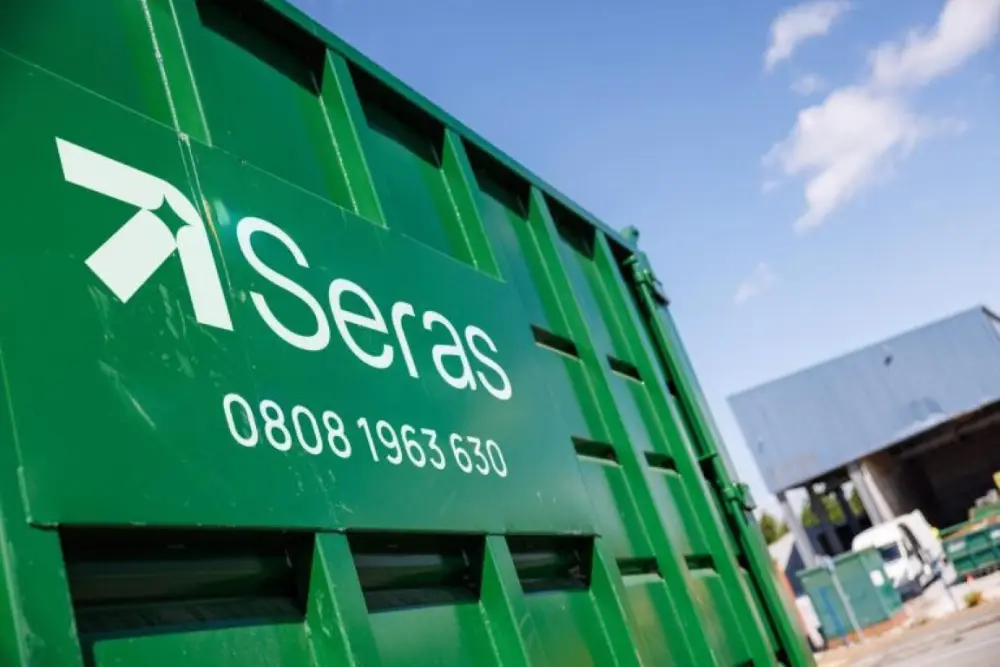
Seras Acquires Enva`s Wood Recycling Operations
Editor WoodBusinessPortal.com team - research, 2026 - november, 19
Seras, one of the UK`s major biomass fuel suppliers, has completed the acquisition of Enva`s dedicated wood recycling and waste wood processing operations, strengthening its position in the British recycled wood and biomass fuel market.
🪵 The transaction includes Enva`s facilities in Manchester, Middlesbrough and Tilbury and significantly expands Seras` capacity to collect, process and recover waste wood.
For the wider European wood industry, the acquisition is relevant because it highlights the ongoing consolidation of the wood recycling sector at a time when recovered wood, biomass and recycled raw materials are becoming increasingly important for wood-based panel manufacturers, biomass plants and the circular economy.
Seras Significantly Expands Its Wood Recycling Network
The acquisition transfers Enva`s dedicated waste wood processing activities to Seras and became effective following regulatory approval.
The operations include facilities previously associated with Hadfield Wood Recyclers, which had become part of the Enva group.
Through the transaction, Seras strengthens its geographical presence in northern England through Manchester and Middlesbrough, while also increasing its position in the south-east through the Tilbury facility.
📊 According to information published by the company, Seras already supplies approximately 1.7 million tonnes of fuel annually to the UK biomass sector, including material produced from waste wood and forestry by-products.
More Than 50 Tonnes of Waste Wood Processed Per Hour in Manchester
The Manchester facility is capable of processing more than 50 tonnes of Grade A waste wood per hour, highlighting the industrial scale of the acquired operations.
Enva`s wood recycling activities processed different categories of waste wood and converted recovered timber into a range of secondary products and raw materials.
Main outlets for recycled wood include:
• fuel for biomass power plants;
• raw material for wood-based panel production;
• animal bedding;
• other products produced through wood recovery and reuse.
Recycled Wood Is Becoming a Strategic Raw Material
♻ For the wood industry, the Seras-Enva transaction underlines the growing importance of recovered wood and processed wood waste.
Recycled wood can serve several competing markets, including material recycling, particleboard and other wood-based panel production, biomass energy and secondary wood products.
This balance can also influence wood waste prices. WoodBusinessPortal.com recently analysed how the German waste wood market remains broadly stable, although the balance between biomass demand and material recycling remains sensitive.
Higher consumption by biomass plants can reduce the volume of recovered wood available to panel manufacturers, while weaker energy demand can redirect more material towards industrial recycling.
Seras Strengthens Its Position in the UK Biomass Market
Seras views the acquisition as an important part of its expansion strategy.
The company is strengthening its position as a major supplier of waste wood fuel and biomass while also expanding its presence in sustainable products such as animal bedding.
🌳 Integrating larger volumes of recovered wood can provide logistical advantages, additional storage capacity and a broader geographical collection and processing network.
For customers, this can translate into greater processing capacity and potentially more reliable supply.
The Transaction Was Reviewed by the UK Competition Authority
The acquisition was reviewed in 2026 by the UK`s Competition and Markets Authority - CMA.
The CMA examined the acquisition by Seras Energy Ltd of G.I. Hadfield & Son Limited, the company representing Enva`s dedicated wood recycling activities.
On 13 August 2026, the authority cleared the transaction without referring it for a Phase 2 investigation.
The case was formally closed in early September 2026, after which Seras announced completion of the acquisition.
Potential Impact on the European Recycled Wood Market
🪵 Although the transaction is focused on the UK, consolidation within the British wood recycling sector is relevant to the wider European market for recovered wood, biomass and wood-based panels.
Panel manufacturers, biomass operators and recycling companies compete for significant volumes of waste wood.
At the same time, the availability of both virgin and recycled wood is becoming increasingly important for the industry. WoodBusinessPortal.com has analysed how economic access to wood raw materials is becoming a strategic factor for the European wood industry.
Logistics costs, transport distances, recovered wood quality and regional processing capacity can all directly influence prices and raw material availability.
Material Recycling Versus Energy Recovery
One of the major issues for the European wood industry is how to use waste wood as efficiently as possible.
Recovered wood of suitable quality can be reused as a raw material for particleboard and other wood products, extending the useful life of the material and the carbon stored within it.
Other categories of waste wood that can no longer be efficiently reused in industrial applications may be directed towards energy recovery.
♻ The development of the circular economy is therefore likely to increase the importance of waste wood sorting, classification, quality control and traceability.
New European packaging and recycling rules may further influence these material flows. WoodBusinessPortal.com explains in its analysis of the EU`s new packaging and packaging waste rules how reuse and recyclability requirements can also affect wooden pallets, crates, boxes and other wood packaging products.
Wood Recycling and the Wood-Based Panel Industry
Recovered wood represents an important raw material for parts of the European wood-based panel industry.
Particleboard producers in several European markets already use substantial quantities of recycled timber as part of their raw material mix.
Growing demand for recovered wood from biomass facilities can therefore create competition between energy recovery and material recycling.
For panel manufacturers, access to consistent quantities of clean, properly sorted recycled wood can help reduce dependence on virgin timber while supporting circular economy objectives.
For biomass operators, waste wood can provide a locally available fuel source and reduce reliance on fossil fuels, subject to applicable environmental and sustainability requirements.
Logistics Are Critical in the Waste Wood Market
🪵 Unlike higher-value wood products, waste wood is particularly sensitive to transport costs.
The commercial value of recovered timber can be relatively low compared with processed lumber or finished wood products, which means transport distance can significantly affect economic viability.
Large recycling networks with facilities positioned close to major population centres, industrial zones and biomass consumers can therefore benefit from economies of scale.
Seras` expanded network in Manchester, Middlesbrough and Tilbury may strengthen the company`s ability to collect and process wood waste from several major UK industrial regions.
What the Wood Industry Should Monitor
📊 For companies operating in wood recycling, biomass, wood-based panels and timber trading, key indicators to monitor include:
• available volumes of waste wood;
• recycled wood prices;
• demand from biomass power plants;
• consumption by particleboard and panel manufacturers;
• waste wood collection and transport costs;
• regional wood recycling capacity;
• circular economy legislation;
• sustainability and traceability requirements;
• consolidation among wood recycling companies.
Further Consolidation Could Follow
The acquisition of Enva`s dedicated wood recycling operations by Seras confirms that wood recycling is becoming an increasingly strategic segment of both the wood industry and the renewable energy sector.
The ability to collect, sort and transform waste wood into industrial raw material or biomass fuel may become more valuable as European companies seek to make more efficient use of available wood resources.
For wood-based panel producers, biomass companies and recycling operators, the scale of collection networks and reliable access to recovered timber could become increasingly important competitive advantages.
Wood Recycling, Biomass and Wood Market Intelligence
WoodBusinessPortal.com monitors developments across the European and international wood industry, including wood prices, recycled wood, waste wood, biomass, wood-based panels, lumber, timber, imports, exports and market trends.
🪵 Are you selling or sourcing waste wood, recycled timber, biomass, wood chips, pallets, lumber or other wood products?
Publish your requests and offers on www.WoodBusinessPortal.com and connect with wood producers, recyclers, suppliers, traders and professional buyers.
📊 Follow WoodBusinessPortal.com for wood market statistics, prices, imports, exports, forecasts and trends affecting the international wood industry and circular economy.
Sources:
Seras
Competition and Markets Authority
Wood Recyclers Association
Letsrecycle.com